
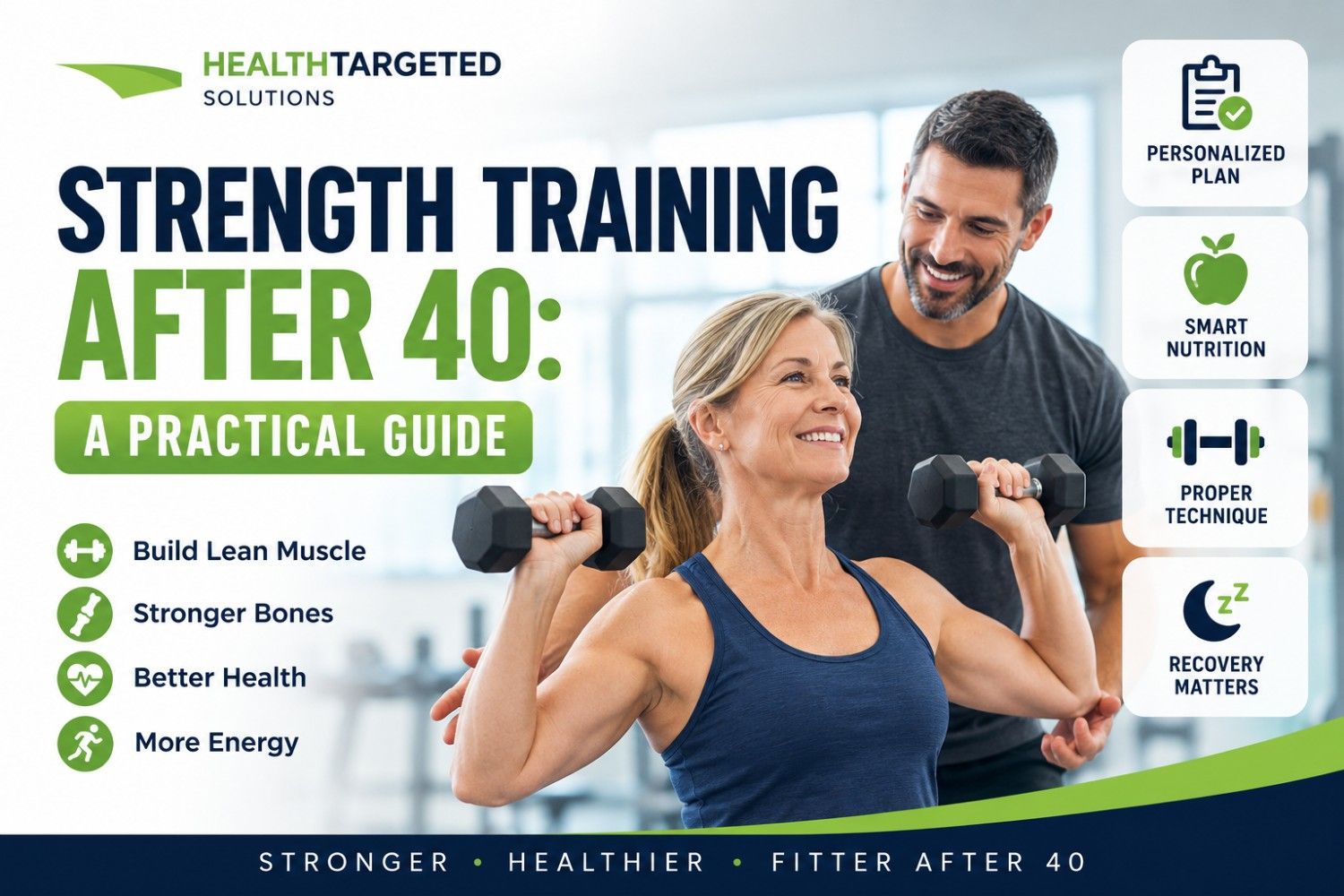
Your 40s are arguably the most important decade to improve your strength training. Hormonal changes are beginning but not yet significant, adaptation capacity is strong, and the habits and physical base you build now directly determine how your body handles the changes of your 50s and 60s.
Key Insights
Strength training after 40: what changes, and how to start well.
Expand key insights
- The 40s are the best window to start strength training, not a late start. Hormonal changes are just beginning and adaptation capacity is still strong.
- Muscle mass, bone density, and hormone levels are all shifting in your 40s. Strength training is the single most effective intervention for all three at once.
- Women benefit most from weight-bearing compound movements (squats, hinges) before the accelerated bone loss that begins around menopause.
- Men see the fastest return on strength training investment in their 40s, before testosterone decline becomes more pronounced in the 50s.
- Two to three sessions per week of compound movements, with a proper warm-up and gradual progressive overload, is enough. More is not automatically better.
- Most people feel stronger within weeks and see visible changes by months three to four. Consistency, not intensity, is the biggest predictor of results.
Table of Contents
Most conversation about strength training after 40 is framed as a late start, as though the right time has already passed. That framing is wrong.
The 40s represent the single best window for establishing a strength training practice. The body still responds quickly, results come within weeks for genuine beginners, and the work you put in now builds a physiological buffer against the more significant hormonal and metabolic changes that arrive in the 50s and 60s.
Adults who start strength training in their 40s do not just improve their current health. They build the muscle, bone density, and movement patterns that protect their future health. The benefits compound for decades.
What Is Changing in Your Body in Your 40s
Understanding the biology of your 40s makes the case for strength training clearer than any motivational argument.
Muscle mass is declining
The gradual loss of muscle that begins in the 30s continues through the 40s. Without resistance training, the average adult loses muscle mass over time, which progressively slows the resting metabolic rate. The 40s are where many adults first notice the effects: it becomes harder to maintain the same body composition with the same diet and activity level.
Bone density is changing
Bone density peaks in the late 20s and early 30s and gradually declines from there. For women, this decline accelerates significantly around menopause. Weight-bearing resistance training (squats, deadlifts, lunges) is the most well-established modifiable intervention for slowing bone density loss. The time to build that protection is before the accelerated decline begins, which means the 40s.
Hormonal shifts are beginning
In women, perimenopause typically begins in the mid-to-late 40s, with average onset around age 47. Estrogen begins to fluctuate and gradually decline. In men, testosterone has been declining at approximately 1 percent per year since the early 30s. By the mid-40s, both men and women are starting to feel these changes in energy, recovery, sleep, and body composition. Strength training directly supports the body's response to all of them.
Recovery is taking longer
The cellular repair processes that let you bounce back from hard training in 24 hours now take 48 to 72. This is not a weakness. It is a biological reality that requires a smarter approach to training structure, not less training.
For Women Over 40
The window before significant estrogen decline is the most important period in a woman's life for building the physical foundation that carries her through menopause and beyond.
Estrogen plays a role in maintaining muscle mass, protecting bone density, supporting insulin sensitivity, and regulating where fat is stored. As estrogen fluctuates and begins to decline in the perimenopause years, women who have built and maintained muscle through resistance training experience these changes differently than those who have not. The protection is not absolute, but it is real and measurable.
The specific case for strength training in your 40s as a woman:
Weight-bearing resistance exercises load the bones, stimulating bone-forming cells and slowing the rate of bone density loss. The squatting, hinging, and pressing movements of a properly designed strength program provide this stimulus in a way that walking and cycling do not.
Muscle mass is the primary driver of resting metabolic rate. Women who maintain or build muscle through their 40s maintain a higher baseline calorie burn, which makes the body composition changes of menopause more manageable.
Insulin sensitivity improves with regular resistance training. This matters because estrogen fluctuations in perimenopause affect glucose metabolism, and improved insulin sensitivity directly supports energy stability and fat management.
Strength training in the 40s also directly reduces the risk of falls and fractures later. This is not a concern unique to older adults: the habits, the movement patterns, and the muscle and balance that prevent falls are built over years, not months.
Health Targeted Solutions offers personal training designed specifically for women, with programming that accounts for the hormonal and physical changes of your 40s from day one.
For Men Over 40
Testosterone in men declines at roughly 1 percent per year from the early 30s. By 40, the effects on muscle mass, fat distribution, energy, and recovery are beginning to be noticeable. By 50, they are significant. The response is not passive.
Resistance training with compound, multi-joint movements that recruit large muscle groups has a greater stimulus on the endocrine system than isolation exercises or low-intensity cardio. Squats, deadlifts, rows, and press movements support the hormonal environment in a way that a treadmill does not.
Men over 40 who take up strength training consistently (two to three sessions per week with appropriate programming) see measurable improvements in body composition, strength, energy, and sleep quality within the first three to four months. The baseline is still relatively strong in the 40s compared to the 50s and 60s, which means the 40s are where the investment yields the most return.
How to Structure Your Training
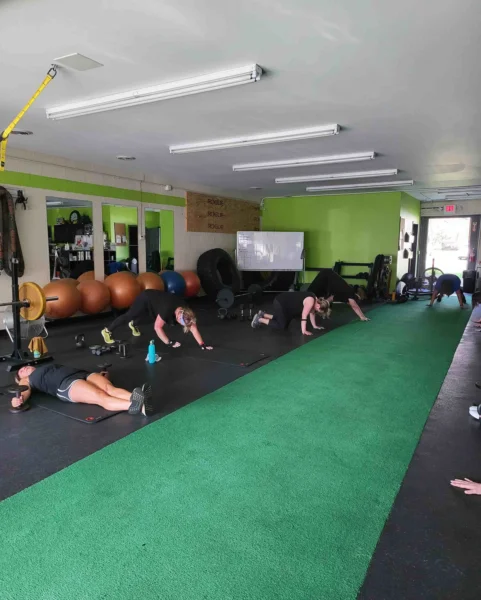
The CDC Physical Activity Guidelines recommend that adults perform muscle-strengthening activities involving all major muscle groups at least two days per week. The American College of Sports Medicine (ACSM) recommends two to three non-consecutive sessions per week for adults beginning a resistance training program. Both are appropriate starting points for adults in their 40s.
Here is a practical framework.
Frequency
Two to three sessions per week on non-consecutive days. Monday, Wednesday, and Friday works for most schedules. The non-consecutive structure gives the body 48 hours to recover between sessions, which matters more at 40 than it did at 25.
Session length
45 to 60 minutes including warm-up. More than 60 minutes is not necessary for beginners and increases the risk of form breakdown and overuse.
Warm-up
This is non-negotiable. Tissue and joints need more time to prepare for load at 40 than at 25. Five minutes of light cardio followed by five to ten minutes of dynamic movement targeting the joints you will load: hip circles, shoulder rotations, bodyweight squats, leg swings. Do all of this before adding any resistance.
Exercise selection
Build the program around compound movements that work multiple joints and muscle groups simultaneously. These produce the most physiological return per session and closely mirror real-world movement patterns. A simple but effective framework for each session:
- A squat pattern (goblet squat, split squat, leg press as a modification)
- A hip hinge (Romanian deadlift, kettlebell deadlift)
- A horizontal push (dumbbell chest press, push-up variation)
- A horizontal pull (dumbbell row, cable row)
- An overhead press (dumbbell press, landmine press as a joint-friendly modification)
- A core stability movement (plank, dead bug, pallof press)
Sets and reps
Two to three sets of 8 to 12 repetitions per exercise for general strength and body composition. Stop each set two to three reps before failure when starting out. Training to failure before your body has adapted to the movement patterns is a common cause of injury in new lifters.
Progressive overload
The body adapts to the demands placed on it. To continue improving, those demands need to gradually increase over time. When you can complete the top end of the rep range (12 reps) with good form across all sets, add a small amount of weight and work back up. Progress in increments of two to five pounds. Slow, consistent progression beats aggressive loading that creates injury setbacks.
Recovery
Sleep is where the body repairs and adapts. Seven to nine hours per night is not optional for adults who want training to produce results. Protein distributed across meals throughout the day supports the muscle protein synthesis that drives improvement. A nutrition coach can help you dial in what "enough protein" actually looks like for your body.
What to Expect in the First Six Months
Weeks 1 to 3: Muscle soreness is normal and will be significant after the first few sessions. This is the body adapting to unfamiliar demands. Strength gains in this period come primarily from neurological adaptations: the brain and nervous system learn to recruit muscle fibers more efficiently. You will likely feel stronger before the muscle visibly changes.
Weeks 4 to 8: Movement patterns become more natural. Strength increases measurably. The soreness that followed every session in the early weeks begins to settle. This is also when consistency becomes the primary challenge and the primary differentiator between people who see results and people who do not.
Months 3 to 4: Visible body composition changes begin for most people with consistent training and appropriate nutrition. Energy levels during the day typically improve. Sleep quality often improves.
Months 4 to 6: Meaningful, established strength and muscle gains. The metabolic benefits of increased muscle mass begin to accumulate. Movement feels different in daily life, not just in the gym.
Six months and beyond: The benefits compound. Bone density, cardiovascular health, hormonal support, and functional capacity all improve with continued training. The habits established in the 40s carry forward into the 50s and 60s in ways that are difficult to replicate if you start later.
Ready to Build Your Program?
A free intro session includes a movement assessment and a conversation about your goals, your schedule, and any joint concerns. No workout, no commitment.
Book Your Free Intro SessionFive Mistakes Adults Over 40 Make When Starting
Skipping the warm-up
The most common injury-causing decision in this age group. Five minutes feels like a waste of time until it is not.
Starting too heavy
Loading the bar before establishing the movement pattern. Poor form under load causes injury. Start lighter than you think you need to and focus on movement quality first.
Neglecting lower body training
Many beginners, particularly women, gravitate toward upper body and core work and avoid lower body exercises because they feel harder. The lower body contains the largest muscle groups in the body. Squatting and hinging patterns are the most important movements for metabolism, bone density, and fall prevention. They should anchor every program.
Going to failure too soon
Training to the point of form breakdown before your body has adapted to the movements creates injury risk without producing proportionally better results. Leave reps in the tank for the first several months.
Not tracking workouts
If you do not write down what you lifted, you cannot apply progressive overload systematically. A simple log of exercise, sets, reps, and weight takes two minutes per session and is the difference between a program that produces results and one that stalls.
Starting in Clinton Township
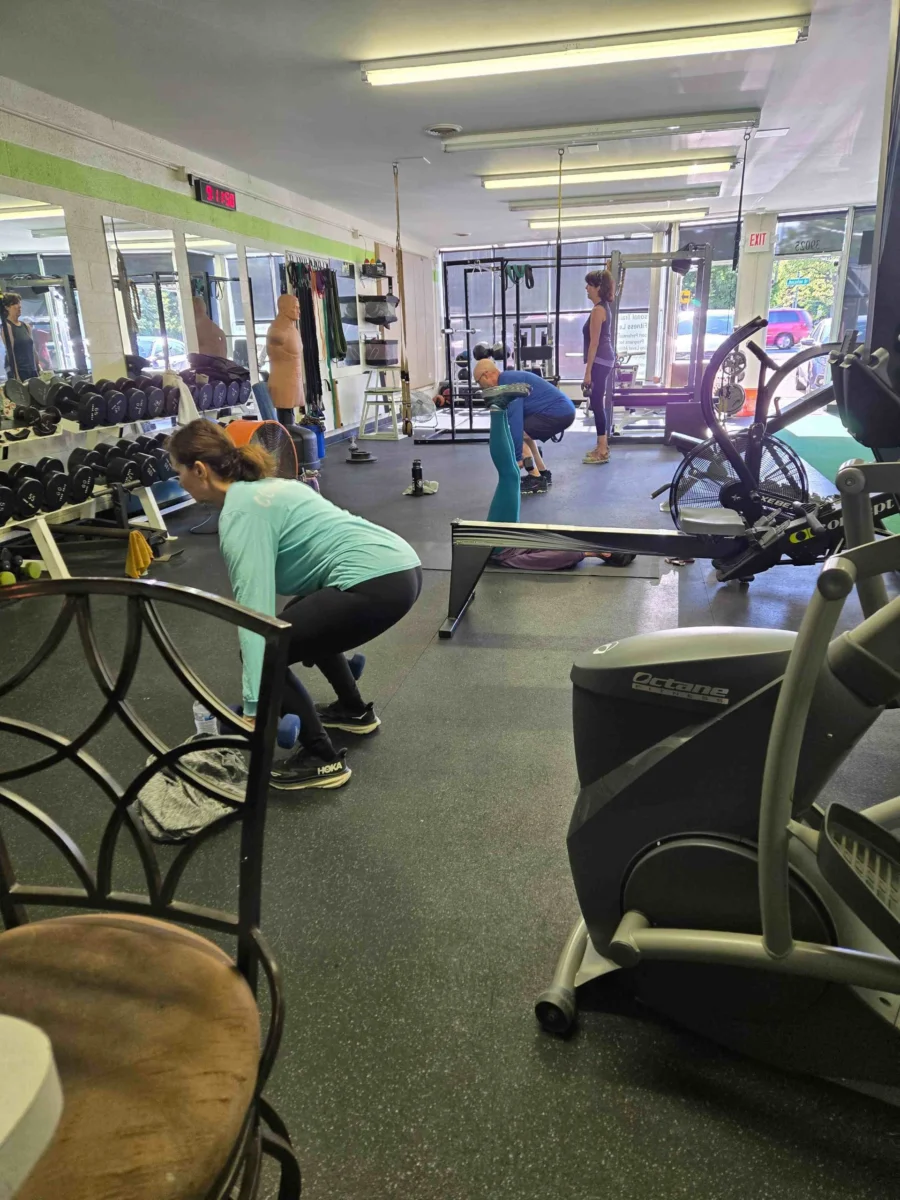
Health Targeted Solutions offers personal training by appointment at 39025 Moravian Dr in Clinton Township for adults beginning or returning to strength training in their 40s. Every program is built around your starting point, your schedule, and your history. For clients with joint concerns or injury history, exercises are modified from the first session.
The free intro session is a conversation and movement assessment with no commitment required. It is the right starting point for anyone who wants a program built for their body rather than a generic routine.
Book a Free Intro Session