
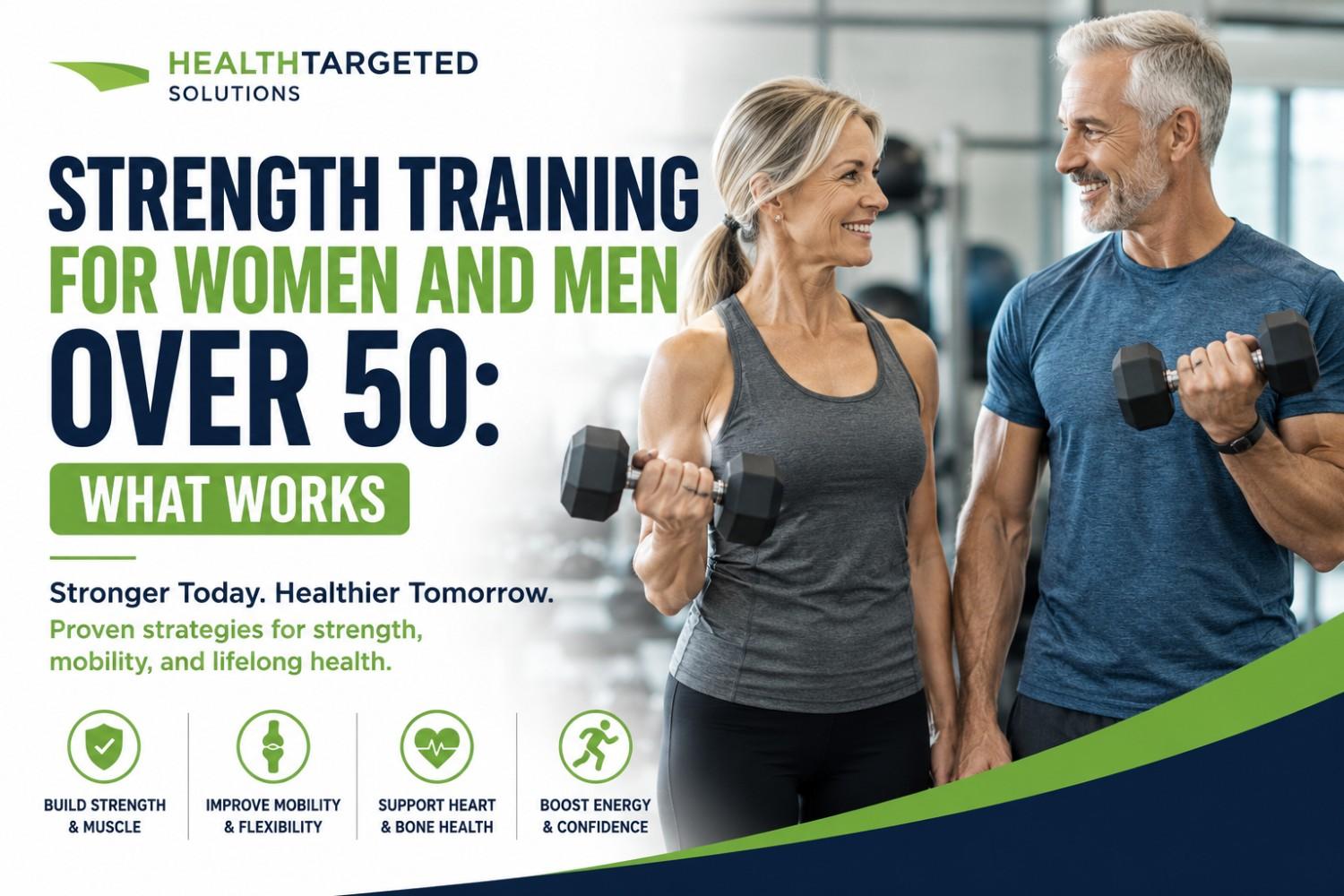
Strength training after 50 is the most effective tool available for managing the body composition changes of menopause, slowing bone density loss, and preserving the muscle mass that determines long-term health. The approach requires modification from training in your 40s, but the capacity to build strength and muscle remains real at 50, 55, and beyond.
Key Insights
Strength training over 50: what changes, and how to train around it.
Expand key insights
- The 50s bring several changes together at once for women: menopause-driven bone loss, muscle loss, and visceral fat redistribution. Strength training addresses more of these simultaneously than any other intervention.
- For men, testosterone decline that started in the 30s is now measurable in muscle mass, recovery, and margin for training error.
- The 40s program foundation still applies (compound movements, two to three sessions a week), but your 50s call for longer warm-ups, more conservative load progression, longer rest between sets, and a de-load week every four to six weeks.
- Protein needs increase after 50. The intake that worked at 35 will likely underperform for muscle building now.
- Results take longer to appear than they did at 40, typically three to five months for visible body composition change, but the long-term payoff (bone density, fall risk, functional independence) compounds for a decade or more.
- If you have not had a DEXA bone density scan by your mid-50s, it is worth discussing with your doctor before designing a training program.
Table of Contents
If you trained in your 40s, your 50s require a different approach. If you are starting fresh after 50, the approach is different again from what would have worked a decade earlier.
The 50s are where the biological changes that were building in the background become active and measurable. Menopause arrives for most women in this decade. Testosterone decline in men reaches a level where the effects on muscle mass and recovery are no longer subtle. Bone density loss accelerates. Recovery takes longer. Results take longer.
None of this means strength training stops working after 50. It means the program has to reflect where your body actually is, not where it was at 35.
What Changes in Your 50s That Makes This Decade Different
The 50s are a distinct physiological decade, and understanding why helps explain every programming decision that follows.
Menopause
The average age of menopause in the United States is 51. The estrogen decline it brings accelerates several processes that were gradual in the 40s: muscle loss speeds up, bone density begins declining at a higher rate, fat redistributes toward the abdomen, insulin sensitivity decreases, and the cardiovascular protection that estrogen provided is reduced. For women, the 50s are where these changes arrive together rather than one at a time.
Accelerated bone density loss
In the years immediately following menopause, bone density loss is at its steepest. Research consistently identifies weight-bearing resistance training as the most effective modifiable intervention for slowing this loss. Squatting, deadlifting, and carrying load through the body are the specific stimuli that tell bone-forming cells to stay active. Walking and cycling, though beneficial for cardiovascular health, do not provide this stimulus adequately.
Visceral fat redistribution
Post-menopause, fat storage shifts toward the abdomen. This visceral fat, stored around the organs rather than under the skin, carries higher cardiovascular and metabolic risk than subcutaneous fat. Resistance training does not preferentially remove visceral fat, but it is one of the most effective interventions for improving the metabolic environment that drives its accumulation.
Slower recovery
Muscle repair after a training session takes longer at 50 than at 40. The cellular machinery for protein synthesis and tissue repair operates more slowly. A program that produced good results three days in a row in the 40s will produce overuse issues in the 50s if recovery is not built in explicitly.
Increased protein needs
Research on older adult nutrition consistently shows that adults over 50 need more protein per kilogram of body weight than younger adults to achieve the same muscle protein synthesis response. Eating the same way you did at 35 while expecting the same muscle-building results is one of the most common reasons strength training underperforms at this age.
For Women Over 50
For women entering or past menopause, strength training is not a fitness preference. It is a health intervention.
The combination of accelerated muscle loss, increased bone density loss, visceral fat accumulation, and reduced cardiovascular protection that menopause brings creates a specific risk profile. Strength training addresses more of those risks simultaneously than any other single intervention.
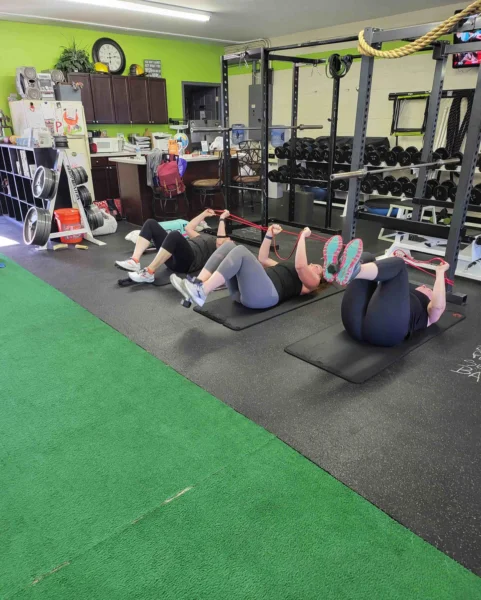
Programming for women over 50 loads the hip and spine on purpose, not by accident.
Bone density
A strength training program for women over 50 should include exercises that load the spine and hips: squats, hip hinges (deadlift variations), lunges, and step-ups. These specific movement patterns stimulate bone formation in the areas most vulnerable to osteoporosis-related fracture: the femoral neck (hip) and lumbar spine. Programs that focus only on upper body, machines, or light resistance miss this entirely.
Muscle mass
Estrogen decline removes a significant driver of muscle maintenance. Without it, the body loses muscle faster and recovers from training more slowly. This makes consistency more important, not less. Two sessions missed in your 50s represent a more significant setback than two sessions missed in your 40s.
Cardiovascular health
Post-menopausal women face a notably higher cardiovascular risk than pre-menopausal women. Resistance training improves blood pressure, blood sugar regulation, cholesterol markers, and vascular health. For women over 50, the cardiovascular benefits of strength training are not a secondary consideration. They are a primary one.
Balance and fall prevention
The risk of a fracture from a fall becomes clinically significant in the 50s for women with declining bone density. Single-leg exercises, stability work, and exercises that challenge proprioception should be built into the program from the start, not added as an afterthought.
If you have not had a bone density scan (DEXA scan) by your mid-50s, this is worth discussing with your doctor before designing a training program. Knowing your baseline bone density informs exercise selection and progression in ways that matter. Health Targeted Solutions offers personal training designed specifically for women, built around exactly this kind of context.
For Men Over 50
Testosterone decline that began gradually in the 30s and 40s is now measurable in its effects. Lower testosterone means less support for muscle protein synthesis, slower recovery between sessions, and a less forgiving margin for training errors.
This does not change the core prescription for men over 50. Compound, multi-joint resistance training remains the most effective approach. What changes is the expectation for how fast results arrive, how much recovery the body needs, and how conservatively the program should progress.
Men over 50 who are experiencing symptoms of significant hormonal change (persistent fatigue, substantial body composition shifts, difficulty recovering from exercise, changes in mood or cognitive function) should discuss this with a physician before designing a training program. These symptoms may indicate a hormonal picture that warrants assessment before loading the body with a new training stimulus. The Complete Health Optimization program is built for exactly this kind of assessment.
For most men over 50, two to three well-structured sessions per week with full recovery between them produces meaningful improvements in strength, muscle mass, and metabolic health. The results take longer to appear than in the 40s. They are real.
Ready to Train for Where Your Body Is Now?
A free intro session includes a movement assessment and a conversation about your history, your goals, and any bone density or health concerns. No workout, no commitment.
Book Your Free Intro SessionHow the Training Approach Changes From Your 40s
If you read our guide to strength training after 40, the foundation is the same: two to three non-consecutive sessions per week, compound movements anchoring the program, progressive overload applied gradually. What follows are the specific modifications that the 50s require.
Warm-up: longer, not shorter
Ten to fifteen minutes of progressive warm-up before adding any load. The joints and connective tissue of a 50-year-old need more time to prepare for resistance than at 40. Rushing this is the most common way training sessions in this decade result in injury.
Exercise selection: add bone-loading and balance
The compound movement framework from the 40s guide remains (squat, hinge, push, pull, core). Two additions:
- Single-leg work in every session. Bulgarian split squats, single-leg Romanian deadlifts, step-ups. These challenge balance and recruit stabilizing muscles that bilateral exercises miss, and load each hip independently, which matters for bone density at the femoral neck.
- Hip hinge variations are elevated in priority. For women in particular, Romanian deadlifts, trap bar deadlifts, and good mornings provide the hip and lumbar loading that research associates with slowing post-menopausal bone loss. They should appear in every session for women over 50.
Load progression: more conservative
Add weight in smaller increments and less frequently than in the 40s. The body's capacity for adaptation at 50 is real, but it requires a longer runway. Going from ten pounds to fifteen on a dumbbell press is a larger jump than it was at 40. Progress in two-pound increments where possible. Five-pound jumps are appropriate for lower body work as strength develops.
Rest between sets: give yourself time
Two to three minutes between working sets of compound exercises. The cardiovascular and muscular recovery between sets takes longer after 50. Rushing rest periods compromises performance on subsequent sets and increases injury risk. This is not inefficiency. It is correct programming for this decade.
Protein: address the nutrition gap
Research on muscle protein synthesis in older adults consistently shows that the protein intake needed to support muscle maintenance and growth is higher after 50 than the standard recommendations designed for younger adults. Distributing protein across three to four meals, including a post-training meal or snack with adequate protein, supports the muscle-building process in a way that a single high-protein meal does not. A nutrition coach can help you build a plan around this.
De-load every month
Every four to six weeks, reduce training volume by approximately half for one week. Keep the movements but drop sets and load. This allows the body to consolidate adaptations, recover accumulated tissue stress, and return to training with more capacity than if you train through fatigue indefinitely. In the 40s, many people can push through without structured de-loads. In the 50s, failing to de-load is a reliable way to stall progress or accumulate injury.
Specific Exercises for Women Over 50
The following six movements address the most important priorities for women over 50: muscle mass, bone density at the hip and spine, balance, and functional capacity. All can be modified for beginners.
Goblet squat
Holding a single dumbbell at the chest while squatting. Loads the quadriceps, glutes, and core. Easier to learn than a barbell squat and effective for building the quad and glute strength that protects the knee and hip.
Romanian deadlift
Hinge at the hip while holding dumbbells, lowering them along the front of the legs. Builds the posterior chain (hamstrings, glutes, lower back) and loads the lumbar spine and hip in the pattern research associates with bone density benefit.
Split squat or Bulgarian split squat
A single-leg squat pattern. Builds balance, challenges hip stability, and loads each hip independently.
Dumbbell row
Single-arm row with a dumbbell, braced against a bench. Builds the upper back muscles that maintain posture and protect the shoulder joint. Upper back weakness is common in women over 50 and contributes to the rounded posture that develops with age.
Overhead dumbbell press
Seated or standing. Builds shoulder and upper back strength. Use lighter loads than lower body work and prioritize range of motion.
Pallof press
A cable or resistance band exercise that resists rotation at the core. More specific to functional stability than a standard plank and directly relevant to fall prevention.
What to Expect: Honest Timelines at 50
Strength training after 50 produces real results. They take longer to arrive than at 40, and the expectations that applied a decade ago will cause frustration if applied now.
Weeks 1 to 4: Soreness is significant after early sessions. Neurological adaptations are occurring. You will likely feel stronger before anything visibly changes. The movements feel awkward at first and more natural by week three or four.
Weeks 5 to 10: Strength increases measurably. Balance work begins to feel more controlled. Energy during daily activity often improves before body composition changes are visible.
Months 3 to 5: Body composition changes begin to appear with consistent training and adequate protein. Visceral fat responds to the combination of resistance training and improved metabolic function, though this takes longer to become visible than subcutaneous fat changes. If weight management is a specific goal alongside strength, a weight loss coaching program layered on top of training can help, and our guide to losing weight after 50 covers the nutrition side in more depth.
Months 5 to 8: Meaningful muscle and strength gains are established. The accumulating bone density and cardiovascular benefits are real but not visible to the eye. Blood markers, energy levels, and functional capacity provide clearer evidence at this stage.
One year and beyond: The compounding value of consistent strength training after 50 extends well beyond body composition. Bone density trajectory, fall risk, metabolic health, and functional independence over the following decade are all measurably better for adults who established a consistent strength training practice in their 50s than for those who did not.
Real People. Real Results.
Don't just take our word for it. Here's what our members have to say.
"I can't recommend this gym enough for anyone in the 55-80 age range looking to stay active, healthy, and confident in their fitness journey. The owner, who is also the trainer, truly understands the needs of older adults and creates a welcoming, supportive environment where you never feel out of place. Al is outstanding."
Kim Silvestro
55–80
Members thriving at every age
"I've been training with Al for nearly 20 years! I initially sought a trainer that could help by showing me alterations to avoid the cycle of injury/rest, injury/rest, and haven't left. He's a very knowledgeable trainer and will be there to correct form and push you to be your best!"
Karlene Myers
20+
Years training together
"As someone who is usually pressed for time, my main concern was that I would get the most out of the time spent there. With Al's deep knowledge and personal attention as a personal trainer, I could not be more satisfied. Thank you Al."
John Debay
100%
Could not be more satisfied
Also Read
Best Gyms in Clinton Township RankedWhere to Start in Clinton Township
Health Targeted Solutions at 39025 Moravian Dr in Clinton Township works with women and men in their 50s who are beginning or returning to strength training. Every program accounts for menopausal status, injury history, and current fitness level. For clients managing health conditions or with specific bone density concerns, the physician-led Complete Health Optimization program provides an integrated approach.
The free intro session is a conversation and movement assessment with no commitment required.
Book a Free Intro Session