
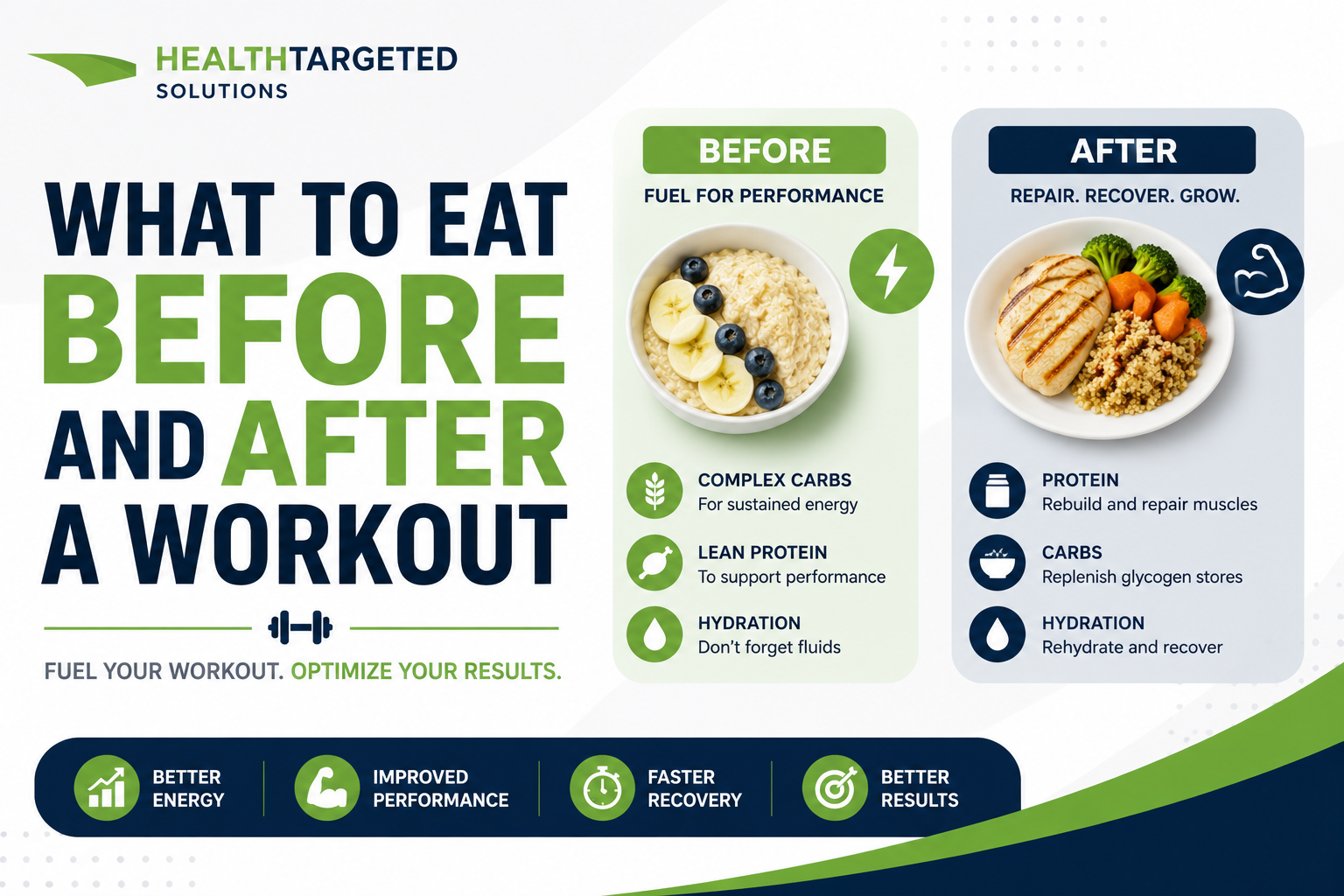
Expand key insights ▾
- Carbs help with workout energy and recovery.
- Protein matters most after training, and often before too.
- Heavy, high-fiber meals can upset your stomach.
- Timing depends on workout type and how you feel.
- Hydration matters before, during, and after exercise.
Table of Contents
- What should you eat before a workout?
- What is the best thing to eat 30 minutes before a workout?
- What should you eat after a workout?
- How does your workout type change what you eat?
- What foods help without upsetting your stomach?
- What kills muscle gains the most?
- What to avoid eating before working out?
- What should adults over 40 keep in mind?
- Frequently Asked Questions
If you want the short version: what to eat before and after a workout depends on timing, workout type, and how your stomach handles food. Before training, most people do best with easy-to-digest carbs plus a little protein. Afterward, protein plus carbs helps you recover and get ready for the next session. Hydration matters in both directions.
That sounds simple, but real life is messy. Some people train before work. Some lift after dinner. Some feel fine on a banana, while others need a fuller meal. The sections below turn that into a practical plan you can actually use, especially if you are strength training, getting back into exercise, or trying to make your nutrition support your fitness goals.
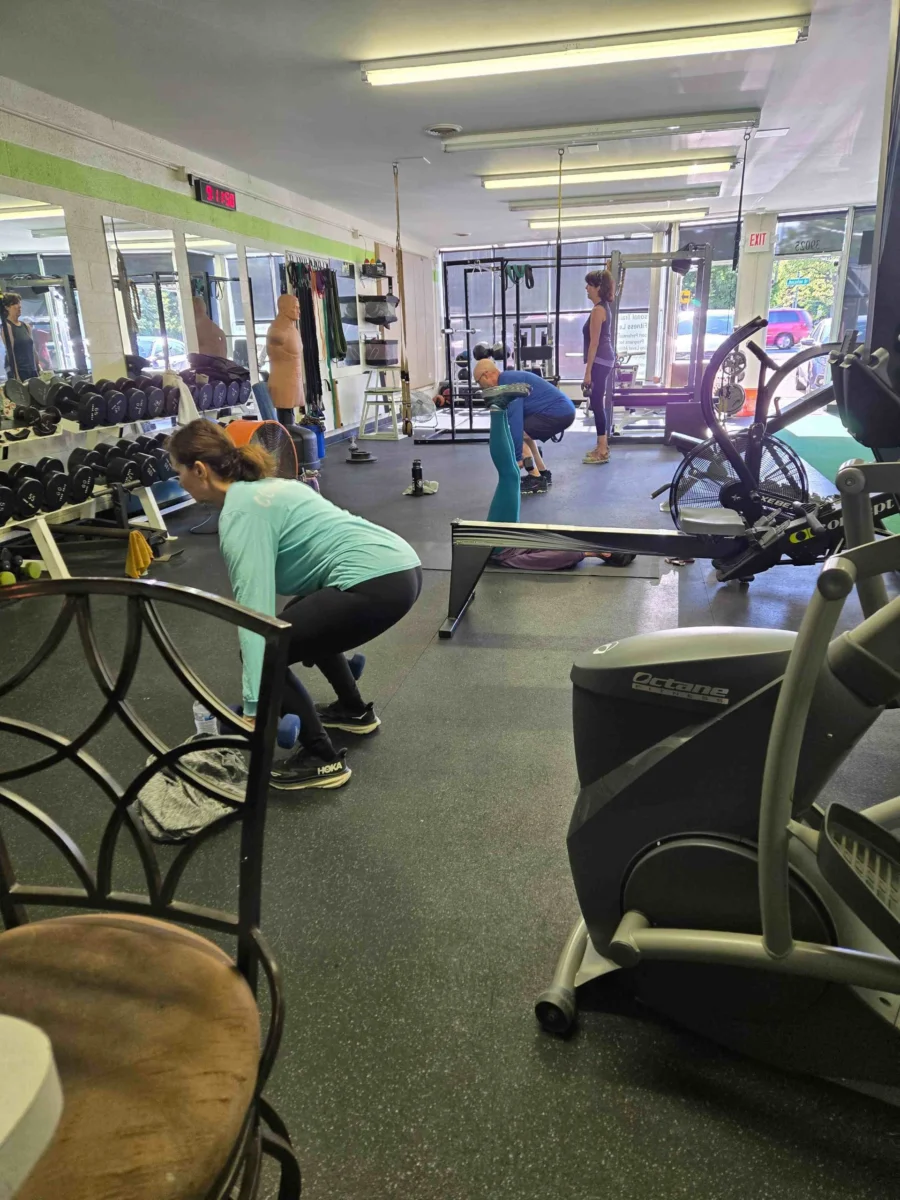
Fueling well is part of the plan at Health Targeted Solutions in Clinton Township.
What should you eat before a workout?
The best pre-workout choice is usually a mix of carbs for energy and, if you have time, a little protein. For most workouts, that means a light meal or snack that sits well and does not leave you sluggish.
If you are eating 1 to 3 hours before training, a small meal works well. Good options include oatmeal with fruit, Greek yogurt with berries, toast with peanut butter, eggs with toast, or rice with chicken. If you only have 30 to 60 minutes, keep it smaller and simpler: a banana, applesauce, toast, or a low-fiber snack you know you tolerate.
- Best for most people: carbs plus a little protein.
- Best close to training: easy carbs, low fat, low fiber.
- Best rule: do not try a new food on a hard workout day.
A common mistake is eating a big, greasy, or very high-fiber meal right before exercise. That can cause bloating, cramps, or a bathroom emergency mid-session. If you are prone to stomach issues, smaller is usually smarter.
What to avoid before you train
Skip foods that are heavy, very spicy, fried, or loaded with fiber right before exercise. Beans, huge salads, and rich cream sauces can sit in your stomach longer than you want. If you train early, a fast snack is often better than forcing a full breakfast.
What is the best thing to eat 30 minutes before a workout?
Thirty minutes before exercise, the goal is energy without stomach drama. The best choice is usually a simple carb snack, especially if you are about to do cardio, intervals, or a hard lift.
Try a banana, a slice of toast with a thin layer of jam, a few crackers, or a small applesauce cup. If you already tolerate it, a small yogurt can work too. Keep the portion modest. You are topping off fuel, not starting a full meal.
For strength training, you may not need anything if you ate recently and feel fine. If you are hungry, though, a small snack often helps you focus and train with better intent.

What should you eat after a workout?
After a workout, aim for protein plus carbs. Protein helps repair muscle tissue, while carbs help refill the energy you used during training. If your session was light, you may not need a full meal right away, but you still should eat a balanced meal within a reasonable window.
Good post-workout options include chicken and rice, eggs with toast, Greek yogurt with fruit, a turkey sandwich, or salmon with potatoes. A smoothie can also work if you need something easy to digest. If you finished a sweaty session and feel drained, add fluids and sodium through food or a drink that makes sense for you.
- After lifting: protein plus carbs is a strong default.
- After cardio: carbs matter a bit more, but protein still helps.
- After a light session: a normal meal may be enough.
You do not need to obsess over a perfect recovery clock. The bigger issue is consistency. If you train often and under-eat after, you may feel flat later and show up to the next workout under-fueled.
Do you need to eat right away?
Not always. Some people are hungry right after training, and some are not. If you feel fine, water first and a meal soon after is reasonable. If you trained hard or have a long gap until your next meal, refuel sooner.
How does your workout type change what you eat?
Workout type matters because not all training uses fuel the same way. A long run, a heavy lifting session, and a yoga class do not create the same food needs.
For cardio, easier carbs tend to work best before training because they digest quickly and support effort. For strength training, a balanced snack or meal with protein and carbs is a better fit. For mobility or lighter sessions, you may only need a small snack, or sometimes nothing at all if you are not hungry.
If your workouts are early, the simplest answer may be a banana and coffee, or just a light breakfast you can digest comfortably. If you train after work, a planned snack can keep you from arriving ravenous and overdoing it at dinner.
That is one reason a one-size-fits-all answer falls short. Your best pre- and post-workout food plan has to match your schedule, your digestion, and your training style.
What if you train first thing in the morning?
Morning training usually calls for something small and simple if you want food beforehand. A piece of fruit, toast, or half a yogurt cup can be enough. If you do best training fasted, keep the session moderate and make sure your first meal after is solid.

Early sessions call for something small and simple before you start.
What foods help without upsetting your stomach?
If your stomach is sensitive, keep pre-workout food plain. The safest choices are usually bananas, toast, rice, oatmeal, applesauce, plain yogurt, crackers, and lean protein in small amounts.
The foods most likely to cause problems are very fatty meals, huge servings of fiber, and anything new you have not tested before. That matters for adults who are returning to exercise, managing digestion issues, or training around a busy workday.
One useful rule is to save the heavy meals for later. Eat lighter before training, then have the fuller plate after you are done. That simple shift solves a lot of "I felt weird during my workout" complaints.
For more support on exercise habits that pair with better fueling, see Strength Training After 40: A Practical Guide and What is Fitness Coaching?.
Also Read
Signs You Need a Personal TrainerWhat kills muscle gains the most?
The biggest things that hurt muscle gains are poor total intake, too little protein, bad recovery, and inconsistent training. Pre-workout food matters, but it is only one piece of the picture. If you train hard and then under-eat all day, your body may not have what it needs to repair and build muscle.
Not getting enough protein is a common issue. Muscle growth depends on giving your body amino acids across the day, not just after the gym. Many people also miss the mark by eating too little overall. If your body is constantly in a large calorie deficit, muscle building becomes harder. That does not mean every person needs a surplus, but it does mean your fuel has to match your goal.
Poor sleep is another major limiter. Muscle repair happens during recovery, and sleep is a big part of that. If you stay up late, wake up often, or only sleep a few hours, you may notice weaker workouts and slower progress. Stress and too much training without rest can add to the problem.
Another hidden issue is making workouts so intense that you cannot recover from them. A hard session can help muscle growth, but only if you can repeat it and recover from it. That is why planning your meals, hydration, and rest matters. Even simple choices like a balanced snack before training and a protein-rich meal after can support the process.
If your goal is muscle gain, think beyond a single snack. The real question is whether your whole day supports training and repair. For many people, that is where a little coaching helps. Health Targeted Solutions can help you match food to your schedule so your effort at the gym actually pays off.
Reach out to Health Targeted Solutions for guidance that fits your life.
What to avoid eating before working out?
Before a workout, avoid foods that are heavy, greasy, very high in fiber, or hard for you to digest. The goal is to feel energized, not full, sluggish, or uncomfortable. If a food usually upsets your stomach, that is a strong sign to keep it away from pre-workout time.
- Banana or applesauce
- Toast or crackers
- Plain yogurt, small portion
- Rice or oatmeal, earlier windows
- Fried food
- Rich cream sauces or heavy cheese
- Beans, big salads, bran cereal
- Anything new you have not tested
Fried foods are a common problem because they digest slowly. Large portions of cheese, creamy sauces, and rich desserts can also sit in your stomach longer than you want. Very spicy meals can be an issue for people who get reflux or stomach irritation during exercise. Even healthy foods can be a bad pre-workout choice if the timing is wrong.
High-fiber foods are another thing to watch. Beans, big salads, bran-heavy cereals, and lots of raw vegetables may be fine at other times of day, but they can cause bloating or urgency right before a workout. That does not mean they are bad foods. It just means timing matters.
If you are eating within an hour or two of training, keep it simple. A banana, toast, applesauce, low-fat yogurt, or a small sandwich is often easier to handle than a big mixed meal. If you have more time before exercise, you can usually tolerate a fuller meal with more carbs and protein.
The best answer is personal. Some people can eat oatmeal and head to the gym. Others do better with something lighter. If you are unsure what works for your body, Health Targeted Solutions can help you build a plan that supports exercise without stomach trouble.
Talk to Health Targeted Solutions about a pre-workout plan that feels good and works well.
What should adults over 40 keep in mind?
For adults over 40, the basics do not change, but the margin for error can feel smaller. If you are trying to build strength, manage weight, or protect energy through the day, skipping meals or under-eating after workouts can make training feel harder than it needs to be.
Also, recovery may matter more than it did in your twenties. That does not mean you need fancy supplements. It usually means you need enough protein, enough total food, and enough hydration to support the work you are doing.
If you have joint pain, a medical condition, menopause-related changes, or you take medication that affects appetite or blood sugar, check with your physician before making a major nutrition shift. That is especially true if you plan to train harder or change meal timing.
If your goal is weight loss plus strength, you may also want to read How to Lose Weight After 50 and Strength Training Guide for Women and Men Over 50.