

Expand key insights ▾
- Personal training in Michigan generally runs $50 to $100 per session, or roughly $300 to $600 a month for regular training.
- Big-box gyms often bundle training with membership, which can make the sticker price misleading.
- Trainer experience, session length, and format (1-on-1 vs. small group) change the quote the most.
- Adults 40+ should ask about joint history first.
Table of Contents
- What does personal training cost in Clinton Township?
- What affects the price most?
- How do Clinton Township gyms compare?
- What are you really paying for?
- How can you tell if a trainer is worth it?
- Is $200 a month a lot for personal training?
- Is $300 or $400 a month a lot for a personal trainer?
- How much is a 1 hour PT session and when does it make sense?
- Is personal training the right option for you?
- Frequently Asked Questions
Personal training is one-on-one coaching from a qualified trainer who designs your workouts, corrects your form in real time, and adjusts the plan as you progress, instead of leaving you to guess at sets, reps, and exercise selection on your own. For adults juggling a busy schedule, an old injury, or a specific goal like weight loss or strength after 40, that structure and accountability is often what actually determines whether a fitness plan sticks or quietly falls apart by week three. That is exactly why personal training cost in Clinton Township comes up so often: people are not just asking about a number, they are asking whether that kind of structured support is worth paying for, and how much it realistically runs.
Personal training cost varies a lot depending on the gym, the trainer, and what is actually included in the quote. Across the local market, personal training cost in Clinton Township tends to track the wider Michigan and national range rather than one fixed number, which means understanding personal training cost before you commit is the difference between a fair deal and an unpleasant surprise on your first invoice. This guide breaks down what drives personal training cost in the area, what a realistic monthly budget looks like, and how to tell if a higher quote is actually the better buy.
If you are comparing options for weight loss, strength, or getting back into a routine after 40, the cheapest quote is not always the best value. Here is how local pricing usually breaks down, what affects it, and what to ask before you pay.
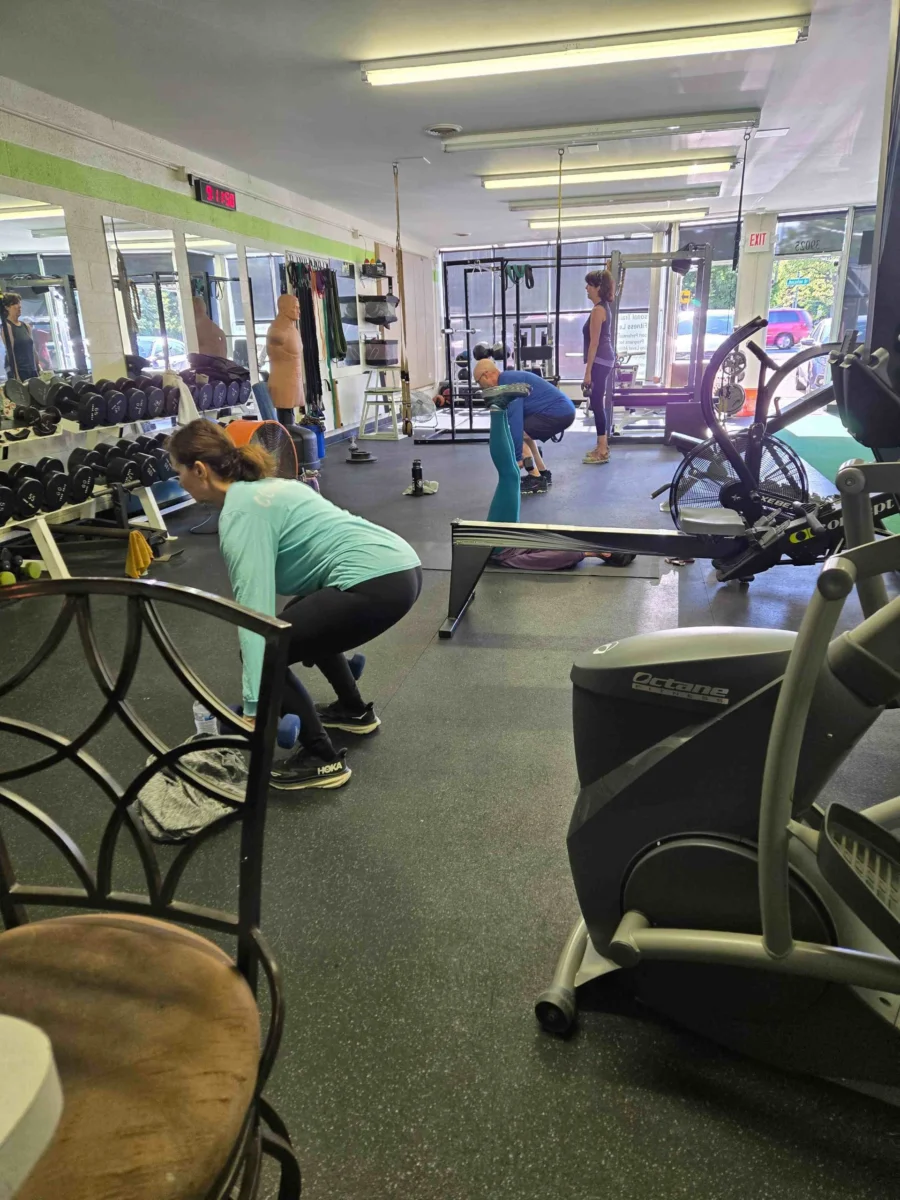
A personal training session at Health Targeted Solutions in Clinton Township.
What does personal training cost in Clinton Township?
Nationally, personal training generally runs $50 to $100 per session, according to industry surveys including the National Strength and Conditioning Association. In Michigan specifically, that usually works out to somewhere between $300 and $600 a month for regular training, depending on how often you go and what is included. Local rates in Clinton Township and the surrounding Macomb County area generally sit within that same range, though some gyms bundle training into a larger membership or introductory package, which can make the true monthly cost lower at sign-up and higher once training is added on.
A practical way to think about it: a single session may land around the lower end of that range, while a recurring plan can become a monthly line item that is closer to a car payment than a gym membership. The value depends on how much structure you need and how often you will actually show up.
- One session a week is often enough for accountability.
- Two sessions a week usually means faster skill-building and more coach contact.
- Monthly plans often make more sense than paying session by session if you stay consistent.
Why the same session can cost more at one gym than another
Some gyms charge mainly for the trainer's time. Others fold in equipment access, assessments, app support, or a bundled membership. That is why two quotes that sound similar can end up very different once you ask what is included.
If one trainer is giving you a basic workout and another is adjusting the plan around past injury, weight loss goals, and weekly progress, the higher quote may actually be the better buy.
What affects the price most?
Three things usually drive the quote: trainer credentials, session length, and how much support comes with the plan. A certified trainer at a busy gym may cost less than a physician-led practice, but the lower sticker price may also come with less personalization between sessions.
Adults 40+ should pay extra attention to experience with strength work, mobility limits, and post-injury modifications. If you are dealing with joint pain, menopause, or medication changes, ask your physician before starting a new program.
- Credentials: more experience can mean a higher hourly rate.
- Format: one-on-one usually costs more than small-group work.
- Support: nutrition coaching, check-ins, and plan updates can change the total.
One-on-one vs small-group training
One-on-one training usually costs more because the coach's attention is fully on you. Small-group training can lower the per-session cost, but you give up some precision and direct feedback.
If you want help with form, confidence, and pacing, one-on-one may be worth the extra spend. If your main goal is consistency and a lower monthly bill, small-group work may be the better fit.
How do Clinton Township gyms compare?
Local gym pricing varies a lot because each business packages fitness differently. Large chain gyms typically advertise low monthly memberships and treat personal training as a separate add-on, while some also fold a limited amount of introductory coaching into the membership itself. Those membership numbers are not the same thing as ongoing private coaching, but they matter because they shape the total you may end up paying once training is added later.
Smaller studios and physician-led practices tend to be more straightforward: the quote usually reflects the trainer's time and attention directly, without a membership layered underneath it. That makes them easier to compare against the general $50 to $100 per session range once you know what is included.
For a wider look at the local gym scene, see our best gyms in Clinton Township guide. If you are trying to decide whether coaching or self-guided workouts make more sense, our fitness coaching overview explains the difference in plain language.
Why bundled memberships can confuse the real cost
Some gyms advertise a low monthly membership and then put personal training behind a separate add-on. Others use trials, assessments, or intro deals to lower the first month only. That can make the quoted price look cheaper than the ongoing total.
Always ask what the bill looks like after the first month and whether sessions expire.
Also Read
Best Workouts for Women Over 40What are you really paying for?
You are not just paying for a workout plan. You are paying for program design, safe progression, accountability, and someone who can notice when your form, energy, or recovery is off. That matters more if you are returning to exercise after time away or want a plan tied to health and weight goals.
Health Targeted Solutions is physician-led, which is a real differentiator for adults who want a more careful approach to fitness and nutrition. It is not medical treatment, and it does not replace your doctor, but it can help the training side fit better with your broader health picture through the Complete Health Optimization program.
That approach may be especially useful if your goals overlap with weight loss, metabolic health, or strength after 40. For more context, read what physician-led fitness is and our strength training after 40 guide.
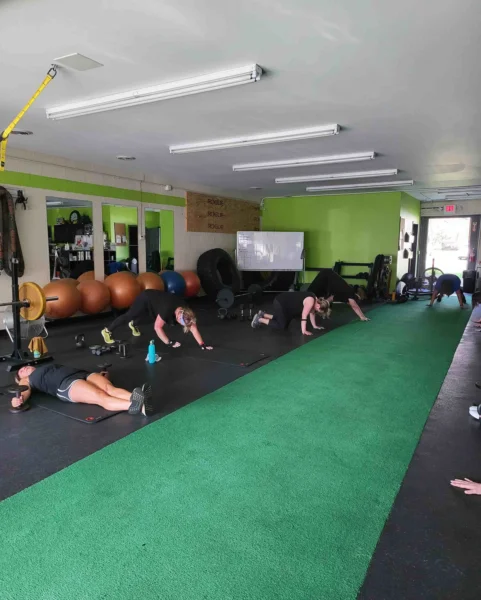
A group training session at Health Targeted Solutions in Clinton Township.
How can you tell if a trainer is worth it?
A good trainer should explain the plan in plain English, adjust for your limitations, and tell you what progress will look like over the next few weeks. If the answer is only a price and a sales pitch, keep shopping.
Ask whether the trainer has worked with adults 40+, whether they change exercises for sore knees or shoulders, and whether they can support your goals without turning every session into a hard workout. The best fit is not always the loudest gym floor or the flashiest intro offer.
- Do they ask about injuries and medications first?
- Do they explain why each movement is there?
- Do they offer a plan between sessions, not just during them?
Is $200 a month a lot for personal training?
Short answer: no, not if you are meeting with a trainer regularly. In many cases, $200 a month is actually a modest budget for personal training, especially if that amount has to cover more than one session. It usually works best when you are buying a small package, doing semi-private training, or mixing live sessions with check-ins and programming.
What matters most is how often you train. If your plan includes one 60-minute session each week, $200 can be right in the normal range. If it includes two sessions a week, that same budget may be unusually low unless the trainer is offering a group format or a discounted rate. The real question is not just the monthly total, but what you get for it.
People sometimes think a lower monthly price is automatically better. That is not always true. A budget-friendly plan can still be a poor fit if the trainer does not adjust workouts, track progress, or help you stay accountable. On the other hand, a slightly higher monthly price can be worth it if it includes a clear plan, coaching between visits, and support that keeps you moving forward.
If you are trying to decide whether $200 is enough, start with your goal. If you want general fitness, better habits, or help getting back on track, $200 may be a solid starting point. If you need weight loss coaching, injury-aware exercise, or more hands-on guidance, you may need a bigger budget or a different format.
The easiest next step is to compare the monthly cost to the number of sessions and the amount of support included. That tells you whether you are paying for true coaching or just paying for time in the room. If you already understand the topic and want help putting a real plan in place, Health Targeted Solutions can do that for you.
Is $300 or $400 a month a lot for a personal trainer?
For many people, $300 to $400 a month is a normal mid-range budget, not a luxury price. Whether it feels high depends on how many sessions you get, how personalized the program is, and whether the trainer offers extras like check-ins, workout updates, or nutrition guidance. A higher monthly cost can be reasonable if it replaces guesswork with a structured plan.
If you are paying around $300 a month, you are often in the zone for one or two sessions a week, depending on the trainer and the setting. At $400 a month, you may be getting more frequent sessions, more individualized attention, or a more specialized service. That can be a good value if you need form correction, injury-safe progressions, or steady accountability.
One useful way to judge the number is to divide the monthly fee by the number of sessions. That gives you a rough per-session cost. Then ask what is included beyond the session itself. Are you getting programming for the rest of the week? Are your workouts adjusted as you improve? Can you ask questions between visits? Those details matter more than the sticker price.
A lot of buyers worry that anything above $200 is too much. But in reality, the value of training comes from results and consistency. If a $350 monthly plan helps you show up, stay safe, and avoid wasted effort, it may cost less in the long run than a cheaper option you never use. This is especially true if you have past injuries, a busy schedule, or clear goals with a deadline.
The best choice is the one that fits your budget and gives you enough support to keep going. If you want that balance without sorting through options on your own, Health Targeted Solutions can provide the service directly and help you move from research to action.
How much is a 1 hour PT session and when does it make sense?
A 1 hour personal training session is usually the most expensive single-session format, but it is also the easiest to understand. You are paying for a full hour of a trainer's time, attention, and coaching. In many places, a one-hour session costs more than a 30-minute session, but not always double. Some trainers price the longer session a little higher because it allows time for warm-up, technique work, and cooldown without rushing.
A full hour makes the most sense when you need more instruction, not just supervision. It can be a good fit if you are learning basic movements, returning after time off, managing a limited range of motion, or working on several lifts in one visit. It is also helpful if you prefer fewer appointments but want each session to cover a lot of ground.
For some people, though, a 1 hour session is more than they need. If your program is already simple and you know the exercises well, a shorter session may be enough. In that case, you may be better off using a trainer for technique checks and doing the rest of your work independently. That can stretch your budget further without losing the benefit of coaching.
When comparing options, do not focus only on the clock. Ask what gets done during that hour. Does it include assessment, personalized exercise selection, progression planning, or support after the session? If not, a long appointment may not deliver much more value than a shorter one.
The best answer to "How much is a 1 hour PT session?" is not a single number. It is whether that hour helps you make real progress. If you want the guidance without having to build the plan yourself, Health Targeted Solutions can handle the training for you and make the next step simple.
Is personal training the right option for you?
Instead of just running the numbers, it helps to ask a more direct question: does your current situation actually call for a coach, or can you manage well on your own for now? Here is a simple way to sort that out.
- ✓ You are returning to exercise after time off or an injury
- ✓ You have joint pain, past injuries, or a health condition to work around
- ✓ You have tried self-directed plans before and stopped within a few months
- ✓ Your goals are tied to a bigger health picture, like weight loss or metabolic health
- • You already know proper form on the main lifts
- • Your current program is producing steady progress
- • You mainly need occasional form checks, not weekly sessions
- • You are consistent training on your own without accountability help
Age and life stage matter too. Adults over 60 managing balance, bone density, or multiple health conditions generally benefit from more structured, senior-specific coaching than a generic gym program provides. Our guide to strength training after 60 goes deeper on what changes at that stage.
Once you have a sense of which column you fall into, the pricing conversation becomes much easier. You are no longer asking "is this expensive," but "does this get me what I actually need."